How to Build a Digital Technique Library for BJJ Students
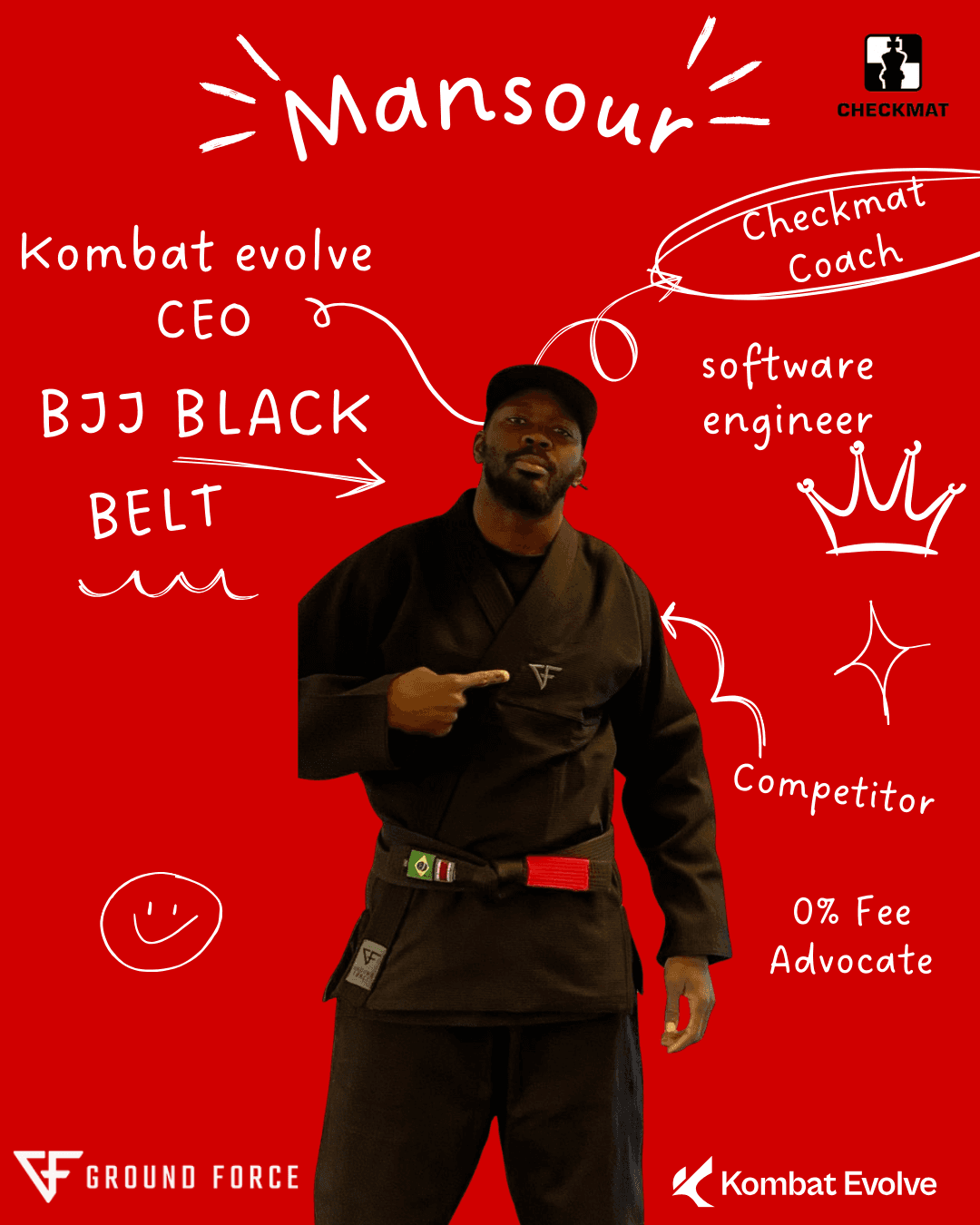
Mansour
There's a question every BJJ coach eventually asks themselves: "Why do students quit right when they're starting to get good?"
The answer almost always comes down to one thing they don't feel like they're progressing fast enough. They can't remember what they learned. They come back to the next class having forgotten the details of the technique you drilled last week, and the gap between mat time and home review feels impossible to bridge.
A digital technique library fixes this. And if you build it the right way, it doesn't just help students improve — it becomes one of the strongest reasons they keep paying for their membership.
Why a Technique Library Is a Retention Tool, Not Just a Teaching Tool
Most coaches think of instructional content as a training aid. That's true, but it's underselling the real value.
When a student can go home after class, pull up the hip escape you drilled, and watch it again at half speed that's a service they can't get at the gym down the road. That's perceived value. That's what justifies the membership fee every month, even when life gets busy and mat time becomes scarce.
Research consistently shows that students who feel like they're improving are the ones who stay. A technique library, built into your gym's membership, directly addresses the two biggest friction points in student retention:
Forgetting details between sessions — fixed by on-demand video review
Feeling stuck — fixed by having a structured, progressive curriculum they can see laid out in front of them
The library doesn't replace mat time. It makes mat time count for longer.
What to Put in Your Technique Library
The temptation is to upload everything at once. Resist this.
The most effective technique libraries are curated, not comprehensive. Students don't want a dump of 300 clips. They want a clear learning path that matches where they are in their journey.
Organize by the fundamentals first
Start with your core curriculum — the techniques every student needs before they can build anything else. For most BJJ gyms this means:
Guard retention and recovery (the most common area white belts fall apart)
Basic guard passes (torreando, over-under, knee slice)
Hip escapes and bridging — the foundational movements behind almost every escape
Closed guard attacks — cross collar choke, armbar from guard, scissor sweep
Positional safety (surviving bad positions, not panicking under mount)
These are the techniques new students will review the most. Getting them organized and filmed clearly is your highest-leverage starting point.
Tag by category and difficulty level
Organize every technique with two labels:
Category: Guard, Passing, Takedowns, Submissions, Sweeps, Escapes, Defense, Drilling
Difficulty: Beginner, Intermediate, Advanced
This matters more than most coaches realize. A white belt who searches for "Beginner Guard" techniques should find exactly what's relevant to them — not get buried under black belt-level worm guard entries they can't use yet.
A well-tagged library also helps you spot gaps. If you have 40 submission videos and only 3 for escapes, you know where your curriculum needs work.
Mix video, PDF, and reference material
Not every technique needs a full instructional video. Some things communicate better as:
A short clip (under 3 minutes) for movement-heavy techniques
A detailed PDF for conceptual frameworks — e.g., "The 4 grips you need to control the turtle position"
A still image with annotations for positional reference — where your hands go, where your weight should be
Supporting multiple file types means you can capture the right format for each technique rather than forcing everything into video.
How to Film Techniques Worth Watching
The biggest barrier coaches face with technique libraries isn't software it's confidence about filming quality. Here's the truth: your students don't need Netflix production values. They need to be able to see your hands, your hips, and hear you explain what matters.
What works:
Film from the right angles — you need at least two: side view (to show level changes and direction) and top-down or front view (to show grip positioning). A partner holding a phone works perfectly.
Keep clips focused and short — explain what the technique is, demonstrate it slowly once, then at speed once. 90 seconds to 3 minutes is the sweet spot.
Narrate while you move — silence with music is not helpful. Talk through what your hips are doing, what you're looking for, when you'd use it in live rolling.
Film in context — show the preceding position. If it's a sweep from closed guard, show how you set it up from the guard position, not just the sweep in isolation.
A phone, good natural lighting, and a clean section of mat is enough to build something your students will actually use.
Using Kombat Evolve's Built-In Technique Library
If you're using Kombat Evolve to manage your gym, your technique library is already built in no third-party hosting, no separate subscription, no pasting YouTube links into a WhatsApp group.
Here's how it works in practice:
Upload in under two minutes
From the Technique Library tab, hit upload and choose your file MP4, MOV, PDF, JPG, or PNG, up to 100 MB per file. Give the technique a name, pick the category and difficulty level, add a description if you want, and you're done.
The file goes straight to secure cloud storage (not YouTube, not Google Drive — your gym's private storage). Students see it immediately in the app.
Your students get notified automatically
Every time you upload a new technique, your students receive a push notification with the technique name, category, and difficulty level. You don't have to send a message in the group chat. The library does it.
This is important for one reason: it keeps your gym top of mind between classes. Students get a notification that there's something new to study, they open it, they start thinking about training. That's the engagement loop that reduces the "I haven't been in three weeks" cycle.
Students can search and filter on their own
Students browse the library by category, difficulty, or just search for what they're looking for. A purple belt drilling guard can filter to Intermediate Sweeps without scrolling through the beginner material. A brand new white belt can find Beginner Escapes without knowing what to look for.
Storage and quota visibility
You can see exactly how much storage you've used and how many uploads you've made this month. No surprises on billing, no wondering if you've hit a limit.
Building the Library as a Membership Perk
The library becomes a retention tool when you treat it like one — which means making it part of how you talk about membership.
When onboarding new students: "You'll have access to our full digital technique library through the app. Everything we cover in class is in there so you can review it at home."
When a student is about to quit: Ask if they're using the library. Often students who feel stagnant haven't been reviewing between sessions. Walking them back to it, pointing out the beginner material, and showing them a learning path can re-engage them.
When pitching premium tiers: If you offer a basic and premium membership, the library — especially the more advanced content — can be gated to premium members. Advanced technique content becomes a reason to upgrade, not just a feature.
For remote or traveling students: Students who travel for work, who have irregular schedules, or who move away but want to stay connected to your gym can maintain access to the library. This turns your membership into something that doesn't fully stop when someone can't make class.
A Simple Starting Plan
If you've never built a technique library before, here's a realistic four-week plan to launch one your students will actually use:
Week 1 — Core movements (5–8 clips)
Hip escapes, bridging, shrimping. The fundamentals that every beginner drills in every class. Film each one with narration. Tag as Beginner.
Week 2 — Closed guard basics (5–8 clips)
Your go-to closed guard attacks and sweeps. The techniques you would teach a new white belt in their first 6 months. Tag by category and difficulty.
Week 3 — Guard passing fundamentals (5–8 clips)
Torreando, knee slice, and your preferred stack pass. Include at least one video on posture and base inside closed guard, since this is where students spend most of their early years.
Week 4 — Share and iterate
Send a message to your team introducing the library. Ask students which techniques they want to see next. Let their feedback drive what you film next month.
Twenty clips, organized clearly, with proper tags — this is already more than most gyms offer. You don't need hundreds of techniques to have something your students find genuinely valuable.
The Long-Term Play
A technique library compounds over time. Every technique you film this month exists permanently. In six months, you'll have 60–80 clips. In a year, you'll have a curriculum that new students can move through systematically, that advanced students can use as a reference, and that sets your gym apart from the competition that's still relying on memory and WhatsApp voice notes.
The coaches who build this now will have a significant structural advantage over those who start thinking about it in two years.
Start with five clips. Upload them this week. See how your students respond.
Kombat Evolve is BJJ and martial arts gym management software built by practitioners. The Technique Library is included in all plans — start your 14-day free trial at kombatevolve.com.