How to Start a BJJ Gym: The Complete Guide for Coaches Ready to Build a Real Academy
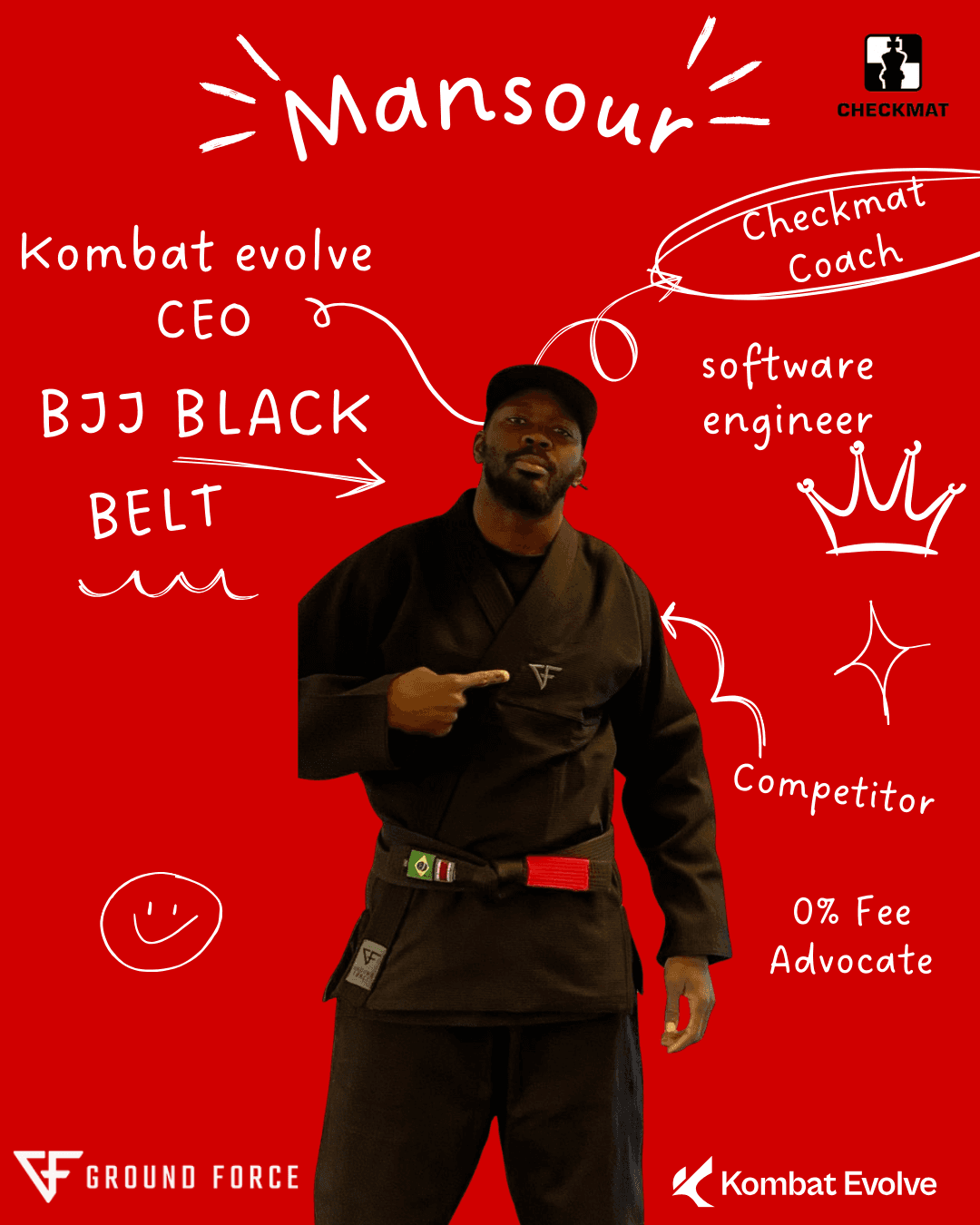
Mansour
Opening a BJJ gym is one of the most rewarding things a practitioner can do and one of the most brutally humbling. You've spent years mastering the art on the mat. Running a business is an entirely different guard to pass.
Most guides on this topic are written by marketers who've never tied a belt. This one isn't. It covers everything from choosing your first location to building the systems that prevent your academy from collapsing under its own growth. And it doesn't sugarcoat the hard parts.
Let's get into it.
1. Start with Brutal Honesty: Is This the Right Move?
Before you sign a lease, ask yourself these questions:
Do you have a coaching credential or lineage people will respect?
You don't need to be a world champion, but students invest years in their BJJ journey they want to know their coach has a solid foundation and a credible lineage. At minimum, a purple belt under a respected instructor is the floor most serious students expect.
Do you have 6–12 months of personal runway?
Most academies don't break even in the first year. If you need the gym to pay your bills from month one, you're setting yourself up for survival mode instead of growth mode.
Do you actually want to run a business?
Owning a gym means collecting payments from people who owe you, handling student conflicts, managing your own marketing, doing tax filings, and fielding 11pm WhatsApp messages. If you love coaching but hate operations read this entire guide and then invest heavily in systems to handle the parts you hate.
If you answered honestly and still want to do it great. Let's build something real.
2. Define Your Academy's Identity Before Anything Else
The gyms that fail often skip this step. They open, get some mats down, and figure out the "brand" later. Then they end up competing on price with every other gym in town.
Your identity is your defensible position. Ask:
Who is your primary student? Hobbyist adults? Competitors? Kids? Law enforcement/military? Women's only?
What's your teaching philosophy heavy drilling and fundamentals, competition team culture, self-defense focused, or open mat-heavy?
What's the vibe you want in the room? Hardcore and competitive? Welcoming and community-driven? Both (and if both, how do you hold the tension)?
This matters more than your logo. It shapes who joins, who stays, and who refers others.
3. The Business Plan: Numbers That Actually Matter
You don't need a 40-page document. You need a clear model that shows when you'll break even and how you'll get there.
Startup Cost Estimates (Realistic Range)
Item | Low End | High End |
|---|---|---|
Lease deposit + first months | €3,000 | €15,000 |
Mats (per sqm, puzzle/roll) | €15/sqm | €50/sqm |
Changing rooms / showers | €1,000 | €10,000 |
Signage & branding | €500 | €5,000 |
Insurance (first year) | €800 | €3,000 |
Website + software setup | €500 | €3,000 |
Marketing launch budget | €500 | €5,000 |
Equipment (dummies, bags, boards) | €500 | €3,000 |
Legal/business registration | €300 | €2,000 |
Total | ~€7,000 | ~€46,000 |
Most real-world academies launch in the €12,000–€25,000 range. The wide variance comes down to location costs and how much renovation the space needs.
Revenue Model
A simple model that works:
Monthly memberships (unlimited classes): the core revenue. Price between €80-€150/month depending on market. Paris, Amsterdam, Munich push toward the upper end. Smaller cities in Spain, Portugal, Eastern France mid-range. Don't let local competitors who've been undercharging for years dictate your price ceiling.
Class passes (10-class packs): for casual students and trial periods.
Kids programs: often under-tapped. A thriving kids class running 3x/week can add €2,000–€5,000/month by itself.
Seminars: quarterly events with guest instructors bring in income and community energy.
Private lessons: €50–€100/hour, high margin, demand-limited.
Merchandise: low priority early on, but branded gis and rashguards generate loyalty and some income.
Break-even math example: If your fixed costs are €4,000/month and you charge €100/month per member, you need 40 paying members to break even. Most healthy academies run 80–150 active members. Plan your trajectory to reach 40+ within 6–9 months.
4. Location: The Decision That Sets Your Ceiling
Your location is the highest-leverage early decision you'll make. A slightly worse gym in a great location will outperform a great gym in a hard-to-reach spot almost every time.
What to Look For
Accessibility over aesthetics. Students need to get there after work. Parking matters. Public transit matters. A beautiful space tucked down an alley that takes 40 minutes to reach by transit will always underperform.
Ceiling height. For a grappling gym, you want at least 3.5m for throws and takedown training. Anything lower limits your program.
Changing facilities. Non-negotiable for retention. Students will not stick around if there's nowhere to shower and change. This is especially important for anyone training before work.
Mat space. The minimum viable training floor is around 100–120 sqm for adult classes. Under that, your class sizes will hit a hard ceiling quickly. Budget for 150–200 sqm if you can.
Lease flexibility. Try to negotiate a 2–3 year lease with a renewal option rather than locking in 5+ years before you know if the location works. Many landlords will negotiate, especially in commercial units that have been vacant.
Sharing vs. Solo Space
Subletting space from a boxing gym, fitness studio, or martial arts center is a smart move for a first year. You reduce overhead massively and test your market without the full lease commitment. The tradeoff is scheduling constraints and no control over the environment. If you go this route, get your class times and mat access in writing.
5. Legal and Compliance: Don't Skip This
This is the unsexy stuff that protects you when something goes wrong and in a contact sport, something will eventually go wrong.
Business registration. Register as a legal entity under your country's framework. In France, a micro-entreprise or SARL works for small academies. In Germany, a GbR or GmbH. In Spain, an Autónomo or SL. In most Eurozone countries, a sole trader structure is fine early on, but a limited liability equivalent protects your personal assets as you grow worth the extra setup cost.
VAT registration. Depending on your country and revenue threshold, you may need to register for VAT, check with a local accountant before setting your pricing, because a VAT surprise can immediately break your margin model.
Liability insurance. Mandatory. Look for sports liability / martial arts school policies specifically. General commercial insurance typically excludes contact sports. In France, the loi Buffet makes it legally required for licensed sports associations to provide member insurance if you affiliate with a national federation, this may be partially covered. Confirm what's covered and what's not in writing.
Student waivers. Have every student sign a liability waiver before they train. In much of the EU, liability waivers have weaker enforceability than in the US courts will still consider negligence regardless. This makes proper insurance and safe facility standards even more critical. Work with a local legal professional on your waiver language.
Child safeguarding. If you run kids classes and you should you need a clear safeguarding policy, documented coach background checks (casier judiciaire in France, Führungszeugnis in Germany, certificado de antecedentes in Spain), and written procedures for handling concerns. National BJJ federations publish guidelines you can adapt.
GDPR compliance. Non-negotiable in the EU. When you collect names, emails, payment data, and health information (waiver responses count as health-adjacent data), you are processing personal data under the General Data Protection Regulation. You need a lawful basis for every data type you collect, a clear privacy policy, and the ability to delete a member's data on request. Use software built with GDPR in mind not a shared spreadsheet or an American tool that ignores EU data residency requirements.
6. Building Your Curriculum and Class Structure
The quality of your mat time is what your reputation is built on. But how you structure it determines whether students progress and stay.
Class Structure That Works
A well-run BJJ class typically follows this format:
Warm-up (10 min) — dynamic movement, BJJ-specific drills (shrimping, granby, hip escapes)
Technique block (25–35 min) — 1–2 connected techniques, with rep drilling
Positional/situational sparring (10–15 min) — controlled live work from specific positions
Free rolling (15–20 min) — full sparring rounds
Cool-down + debrief (5 min) — what was practiced, preview of next class
Curriculum Tracks
Avoid the trap of teaching whatever you feel like on a given day. Students need progression, and so does your program.
Build at least two tracks:
Fundamentals (white-blue belt): A rotating curriculum covering guard passing, escapes, guard development, takedowns, and submissions with enough structure that a 3-month-old student and a new white belt can train the same class.
Advanced/All-levels: Deeper details, competition prep, higher-percentage combinations.
A 12–16 week rotating fundamentals curriculum means a new student who joins in October learns the same core concepts as someone who joined in February, before the cycle repeats.
7. Pricing Strategy: Don't Race to the Bottom
The most common pricing mistake new gym owners make is undercharging because they're scared to lose prospective students. This creates a vicious cycle: you need more members to make ends meet, you burn out, you can't invest in improving your program, quality drops, retention drops.
Price for the gym you want to run, not the gym you currently have.
Research your local market and position accordingly. If the average BJJ gym in your city charges €90/month, charging €70 doesn't make you 20% better value it signals uncertainty. Charging €110 with a cleaner facility, better systems, and a clear curriculum signals premium.
Membership Structures That Work Well
Monthly unlimited (SEPA direct debit or card autopay): your core offering. In the Eurozone, SEPA direct debit is the gold standard for recurring payments — lower fees than card, widely trusted by members. Set it up properly from day one and you'll never chase a payment again.
Intro offer: A 7–14 day unlimited trial for €20–€30 (not free people value what they pay for). This converts better than "free trial" because the small payment creates commitment.
Annual prepay discount: Offer 10–15% off for annual payment. Great for cash flow and reduces churn a student who paid for the year will push through the 3-month slump instead of quitting.
Family discount: If you run kids programs, offer a family bundle. Two family members training together is a powerful retention mechanism.
8. Student Acquisition: How to Fill Your Mats
You can have the best BJJ in the city and fail if nobody knows you exist. Marketing is a skill like any other treat it seriously.
The First 100 Members
Your first members almost always come from your personal network. Before you open:
Tell every training partner, friend, family member, and colleague what you're doing.
Run a "founding member" pre-launch offer — limited spots at a lower rate for people who commit before opening day.
Host a free open mat before launch to generate buzz and let people try the space.
Digital Presence That Actually Drives Leads
Google Business Profile is the single most important digital asset for a local gym. Optimize it completely photos, hours, category (Martial Arts School), and actively collect reviews from every happy student. Most people searching "BJJ gym near me" are going straight to Google Maps.
Instagram is where BJJ lives socially. Post consistently: technique clips, rolling highlights, belt promotions, student stories. Volume beats perfection 4 posts/week of decent content beats 1 post/month of polished content.
Website with SEO — you need a clean website with dedicated pages for Adults BJJ, Kids BJJ, pricing, and a trial class booking form. Blog content targeting local keywords ("BJJ in [City]", "Brazilian jiu-jitsu for beginners [City]") compounds over time and drives free traffic.
Referrals are your most efficient acquisition channel long-term. Happy members refer friends. Build a formal referral program — a free month for both the referrer and the new member is a simple model that works.
Retention Is Your Real Growth Lever
Most gym owners obsess over new student acquisition and ignore retention. But keeping a student for 2 years instead of 6 months is worth far more than finding two new ones. Focus on:
The first 30 days: New students who make it through the first month have dramatically higher 12-month retention. Assign a "training buddy" to new members. Check in personally. Track attendance.
Progress visibility: Students who can see their own progress stay longer. Belt promotions, stripe ceremonies, and technique milestones should be celebrated and visible.
Community: A gym where students become friends is a gym people don't quit. Open mats, social events, and competition team trips build this. Systems alone don't — culture does.
9. Operations: The Systems That Set You Free
This is where most athlete-turned-gym-owner coaches struggle most. You know how to coach. You may not know how to run the back office of a business.
The gyms that scale beyond 60–80 students without the owner burning out are the ones that systematize early.
What You Need to Track
Attendance — which students are coming, how often, and who's been absent. A student who misses 2+ weeks without communication is a churn risk. You need to know before they cancel.
Payments — who's paid, who hasn't, what's overdue. Chasing payments manually is a morale-destroying task. Automate it.
Belt and stripe tracking — who is at what rank, how long they've been there, and what criteria they need to meet for promotion. Keeping this in your head works for 20 students. It fails at 80.
Leads and trial students — who enquired, who visited, who converted, who ghosted. A lead pipeline with follow-up is the difference between 30% and 60% trial-to-member conversion.
Class scheduling — a clear, published schedule that students can rely on. Any changes need to be communicated instantly.
Using Software to Automate the Back Office
The transition from "coach with a spreadsheet and a WhatsApp group" to "academy owner with real systems" is the inflection point for most gyms. The coaches who make this transition grow. The ones who don't become trapped doing admin instead of coaching.
This is exactly why Kombat Evolve was built by a BJJ black belt who was living this problem. Instead of duct-taping together five different tools (a payment processor, an attendance sheet, a belt tracking spreadsheet, a scheduling app, and a messaging platform), Kombat Evolve puts everything in one place built specifically for the way BJJ academies actually operate.
QR code attendance means students check themselves in — you never touch a clipboard. Automated belt tracking tells you who's ready to promote based on your own criteria time in grade, attendance thresholds, and stripe count tracked automatically. Stripe payments via Stripe run on autopilot, and the revenue dashboard shows exactly where your academy stands at any moment.
For academies running kids programs alongside adults, tracking two different class structures and payment tiers in the same system matters. For multilingual academies serving students from different backgrounds, having a platform available in 17 languages isn't a nice-to-have.
The goal isn't the software — the goal is spending your energy on coaching, culture, and growth. Good systems make that possible.
10. Growing Past the First Year
If you make it through year one with 50+ active members and your fundamentals in place, you're in a much stronger position than most. Now the strategic decisions shift.
Kids program expansion is the highest-ROI growth move for most academies. A robust kids program creates families who are deeply embedded in your community. Parents who drive their kids to class twice a week for years don't quit — they refer, they come to adult classes themselves, and they become your most loyal advocates.
Competition team — a visible competition team raises the profile of the entire academy. Even if 80% of your students never compete, having students doing well at local and national tournaments signals quality to prospective members.
Affiliate and satellite programs — once your curriculum and systems are solid, opening a second location or supporting a satellite school under your name is a real option. This requires your operations to be genuinely systematized — if the first location still depends on you being there for everything, you're not ready for a second.
Instructor development — your long-term ceiling is the quality and number of coaches you develop. A single-instructor academy can only grow so far. Identifying purple and brown belts who have coaching aptitude and investing in them early pays off in years two through five.
11. Common Mistakes (and How to Avoid Them)
Underpricing early and never raising rates. If you open at €60/month because you're nervous, raising to €90 two years later will feel impossible. Price correctly from the start.
Treating every student the same. A competitive 22-year-old training 5x/week and a 45-year-old hobbyist training twice a week need different programs, communication styles, and retention strategies. Know your students.
Ignoring the first-month experience. Most churn happens in the first 4–6 weeks. This is where your onboarding systems matter most.
No contract system. Month-to-month is fine, but students need to understand what they're committing to. Even a 30-day notice policy reduces impulsive cancellations.
Relying on WhatsApp for everything. It works at 20 students. At 80, information gets lost, payments get confused, and you're spending hours a week managing a group chat instead of running your business.
Burning out before the gym gets good. The first year is hard. Build systems, ask for help, hire even part-time administrative support if you can. A burnt-out owner is the most common reason good gyms close.
The Bottom Line
Starting a BJJ gym is a long game just like the sport itself. The coaches who build lasting academies are the ones who approach the business with the same discipline, consistency, and commitment to fundamentals they bring to the mat.
Get the location right. Price yourself correctly. Build a curriculum people can progress through. Invest in systems so you can coach instead of doing admin. And take retention as seriously as acquisition.
If you're in the planning stages and want to see how Kombat Evolve handles the backend attendance, payments, belt tracking, student communication
start your free 14-day trial and see how much faster you can run your academy when the operations actually work for you.
Kombat Evolve is the all-in-one BJJ academy management platform built by practitioners, for practitioners.